
Water & Wastewater Treatment Equipment Serving Kansas City, MO
Precision lime feed, biosolids stabilization, drying, storage, and truck loading systems engineered by RDP Technologies for Kansas City-area municipal facilities.
Trusted Process Equipment for Kansas City Water & Wastewater Plants
RDP Technologies has spent more than 45 years building robust, dependable process equipment grounded in practical technologies that simply perform. Municipal operators across the greater Kansas City region turn to RDP for accurate, low-maintenance systems engineered to run reliably for decades.

Lime Slaking & Feed Systems for Kansas City Water Treatment Facilities
Kansas City pulls its drinking water from the Missouri River, a source hard enough that softening sits at the center of the treatment process rather than at its edges. KC Water has long leaned on lime softening to bring that hardness down before water reaches homes and businesses across Jackson, Clay, and Platte counties, and RDP engineers the lime slaking and lime feed equipment a softening-first plant relies on. Building for precision and steady uptime matters most where softening is a daily, year-round demand rather than an occasional adjustment.
RDP's Tekkem range of lime slakers for water treatment works by weight, using load cells to meter a set quantity of quicklime against a set quantity of water and keeping the reaction in the temperature band where slaking runs cleanest. That weight-driven control is the basis for precision lime dosing systems, with slurry strength dialed up or down to match what a plant treating high Missouri River volumes actually needs. Holding consistent chemistry through seasonal swings in river turbidity and hardness keeps finished water steady.
Without any hardware swap, the same Tekkem unit operates as a hydrated lime feed system, which gives Kansas City utilities room to adapt as quicklime and hydrated lime pricing shift. Dosing stays accurate across multiple feed points through a recirculating slurry line and metered valve control. One moving part in the reaction tank keeps maintenance light and predictable for plants that run continuously.
See the Tekkem Slaker
Custom Engineering & Process Equipment Support Serving Kansas City
Treatment systems on both sides of the state line carry layers of construction history, much of it shaped by Kansas City's long-running Overflow Control Program and the federal consent decree driving billions in sewer and plant upgrades. RDP Technologies has spent better than four decades on custom process equipment engineering, and brings that depth to projects across the Missouri-side service area managed by KC Water.
RDP keeps engineering, fabrication, and controls work in its own shop, so equipment is shaped around the tankage, footprints, and operator habits a plant already has instead of arriving as a one-size package. Control systems tie into SCADA and produce the reporting depth that Missouri DNR and EPA Region 7, headquartered right here in the metro, expect from regulated facilities.
From first scoping through startup and the years that follow, RDP stays in direct contact with municipal engineers, consultants, and operations crews. Robust equipment, dependable performance, and practical technology that simply works have anchored the company's approach from the start. A single feed skid or a complete biosolids line, Kansas City clients deal with one manufacturer that stands behind the equipment long-term.
Browse Technical Resources
Biosolids Storage & Precision Truck Loading Systems
The Blue River plant and the other Missouri-side facilities move biosolids on a steady schedule, and loadout equipment has to hold that rhythm through the hot, humid summers and hard winters the region throws at it. RDP designs biosolids storage systems together with precision truck loading systems so material flows from dewatering to the outbound truck without manual handling.
Inside live bottom bin storage, a moving floor keeps dense, sticky cake advancing where steep-sided hoppers would bridge or rat-hole. The precision truck loading system runs sludge cake truck loading on its own, filling a trailer in minutes and landing within a few hundred pounds of the weight the operator sets.
Years of biosolids conveying equipment work have produced a loadout arrangement that turns trucks around fast and clean with barely any staff at the bay. With loading handled automatically, Kansas City crews put their hours toward work that needs them elsewhere in the plant. For utilities running tight hauler schedules, that dependability shows up as fewer delays and less overtime.
Explore Live Bottom Bins
Biosolids Lime Stabilization & Pasteurization Solutions in Kansas City, MO
Biosolids management in the Kansas City area has matured under decades of federal and state oversight, and RDP Technologies has supplied lime-based treatment in this arena since the EPA 503 rule came into force. Our biosolids lime stabilization line covers Class B biosolids stabilization for land application as well as full Class A biosolids treatment where a higher-grade product or broader reuse is the goal.
The EnVessel Pasteurization biosolids pasteurization system counts among the most-installed Class A methods nationwide, now past 70 operating systems. EnVessel leans on a measured pairing of lime and heat rather than heavy chemical overdosing, hitting the time, temperature, and pH thresholds that complete pathogen kill demands while holding lime use down.
For a fully enclosed approach, Enhanced Pasteurization runs the process in a sealed sequencing batch reactor that pushes pH beyond 12 as controlled heat finishes disinfection. Each route stands as documented wastewater pathogen reduction equipment, backed by field case studies and long municipal track records. Kansas City facilities mapping out capital work will find both recognized by Missouri DNR and EPA alike.
View EnVessel Pasteurization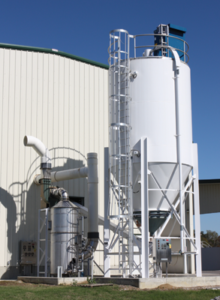
Biosolids Drying Systems for Kansas City Wastewater Plants
Trucking distance and disposal expense make biosolids drying systems a sound long-term play for plants in a metro that hauls material across a wide two-state footprint. The RDP-Fenton wastewater sludge dryer operates on a repeating batch cycle, letting operators stretch or shorten drying time to follow the cake solids variation that any dewatering line produces.
Batch sludge drying equipment takes that fluctuation in stride, while continuous dryers tend to stumble when the upstream feed changes without warning. Crews running the unit point out how rarely it needs hands-on attention once the recipe settles in.
What comes off the dryer is far lighter and smaller in volume, which trims hauling cost and opens the door to fertilizer, soil-amendment, and energy-recovery outlets across Missouri and the central plains. Linked to RDP lime feed or storage equipment upstream, the dryer completes a single-source biosolids line with matched controls and durable support. The original design put ease of operation and long service life first, and installed-site performance data bears that out.
Learn About Fenton Drying
Ready to Discuss Your Kansas City Project?
Let's talk through the lime feed, biosolids, or drying equipment your Kansas City facility needs. The RDP Technologies team is ready when you are.