
Water & Wastewater Treatment Equipment Serving Des Moines, IA
Precision lime feed, biosolids stabilization, drying, storage, and truck loading systems engineered by RDP Technologies for Des Moines-area municipal facilities.
Trusted Process Equipment for Des Moines Water & Wastewater Plants
For more than forty years RDP Technologies has been turning out equipment that holds up, keeps running, and stands on practical technology made to perform. Plants around central Iowa turn to RDP for systems that stay accurate, hold up, and ask little of the people who run them.

Biosolids Drying Systems for Des Moines Wastewater Plants
Out across central Iowa, biosolids often ride a long way to farm ground, and every ton of water still in them adds to the haul, which is the argument biosolids drying systems make for Des Moines plants. The RDP-Fenton wastewater sludge dryer repeats its batch cycle end to end, so an operator can match each run to whatever cake solids dewatering sends over rather than one locked-in cycle.
Batch sludge drying equipment keeps pace through those swings, while continuous dryers tend to stumble the moment the incoming feed shifts. Operators report it needs little watching once a dependable recipe is set, which frees the crew for the rest of the plant.
What the dryer turns out is much lighter and far smaller in bulk, cutting hauling cost and opening reuse in fertilizer, soil building, and energy recovery across Iowa and the Corn Belt. Sitting at the back of an integrated RDP line, the dryer ties into the same control wiring as the lime feed and storage units running ahead of it, with one outfit accountable for the whole train. The design started out aimed at simple operation and years of service, and field data from working sites stands behind it.
Learn About Fenton Drying
Biosolids Storage & Precision Truck Loading Systems
The Des Moines metro's Wastewater Reclamation Facility runs biosolids out steadily, and the loadout has to match that flow through humid Iowa summers and deep-freeze winters. RDP runs biosolids storage into precision truck loading as one motion, so the material goes from dewatering to the truck untouched.
Inside the live bottom bins, a moving floor drives soggy, dense cake toward the gate, clearing it without the bridging and rat-holing a plain steep-walled hopper invites. Once it hits the precision truck loading system, loadout runs on its own, sludge cake truck loading filling out a trailer in minutes and the load coming to rest just shy of the operator's set figure, off by a few hundred pounds at most.
A deep stack of biosolids conveying equipment work sits behind a loadout that moves trucks through quick and clean with almost no one at the bay. Because the loadout minds itself, Des Moines crews can put their time on work that truly needs it. For plants slammed with one hauler day after another, that steadiness comes through as fewer delays and lower overtime.
Explore Live Bottom Bins
Lime Slaking & Feed Systems for Des Moines Water Treatment Facilities
Des Moines Water Works softens hard river water drawn from the Raccoon and Des Moines Rivers, running it through lime treatment at the Fleur Drive plant before it heads to homes across Polk County. Softening at that volume hinges on getting the dose right, and RDP crafts lime slaking systems and lime feed systems exacting enough for that kind of dosing.
At the Tekkem lime slakers for water treatment, quicklime and water land on load cells and are weighed before the reaction, keeping the slaking reaction in its cleanest working range. Going by weight rather than guesswork is how precision lime dosing systems stay sharp, letting the plant dial slurry strength to whatever the softening load demands. Even a steady river draw shifts with the seasons, and even dosing keeps the softened water on spec.
With nothing changed out, that same Tekkem rig can step up as a hydrated lime feed system, so Des Moines can shift as lime supply and price change. A recirculating line under metered valving keeps feed accurate at every point in the plant. The reaction tank holds just one moving part, which keeps upkeep light and predictable even at a plant that runs nonstop.
See the Tekkem Slaker
Biosolids Lime Stabilization & Pasteurization Solutions in Des Moines, IA
Central Iowa's farm country sends heavy nutrient and nitrate loads into the rivers, and the rules that answer them keep local biosolids work under close pathogen and nutrient watch. RDP Technologies has built lime treatment systems going back to the early days of the 503 rules, and the RDP biosolids lime stabilization line carries both grades: Class B biosolids bound for land application, alongside Class A biosolids treatment where a cleaner, more mobile product is what's wanted.
EnVessel Pasteurization stands among the country's most widely run Class A processes, with better than 70 units in service. Instead of over-liming, it couples a measured lime dose with heat, holding time, temperature, and pH at the marks full pathogen kill needs while keeping reagent use modest.
Where the work has to stay sealed, Enhanced Pasteurization walls the process into a sealed reactor, lime driving pH over 12 as controlled heat completes the kill. Both count as established wastewater pathogen reduction equipment, with a long trail of installs and on-site numbers behind them. For Des Moines plants laying out capital work, each is a route Iowa DNR and EPA have backed for years.
View EnVessel Pasteurization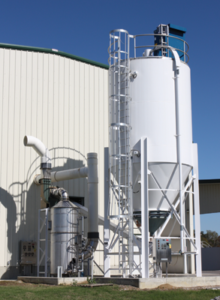
Custom Engineering & Process Equipment Support Serving Des Moines
The Des Moines metro keeps investing in its water and sewer systems, from upgrades at the regional Wastewater Reclamation Facility to flood-resilience work along the Raccoon and Des Moines Rivers. Capital efforts of that size fit RDP Technologies, which puts a custom process equipment engineering history that runs past four decades behind the metro's plant work.
Since RDP engineers, builds, and programs its own equipment, it can tailor a system to a plant's actual tanks, cramped spots, and day-to-day routines instead of shipping a stock unit. Its controls patch into SCADA and produce the records Iowa DNR and EPA Region 7 ask for at permitted sites in Iowa.
RDP stays close from the first site visit through fabrication, startup, and the long service run after, alongside county engineers, outside consultants, and the operators who run the floor. The bar at RDP hasn't moved: equipment that takes the years, performance crews can count on, and engineering plain enough to prove itself on the floor. A single feed skid or an entire biosolids line, Des Moines clients have one builder standing behind the result from startup on.
Browse Technical Resources
Ready to Discuss Your Des Moines Project?
Have a lime feed, biosolids, or drying job booked at a Des Moines plant? RDP Technologies can scope it with you and chart the next steps.